


TMJ is temporomandibular joint syndrome. The TMJ is the hinge connecting your jawbone to your skull that allows the jaw to open, close, and move side to side. TMJ disorder involves dysfunction in this joint or the surrounding muscles, causing pain in the face, ear, and neck area. Symptoms include pain or tenderness in the jaw, neck, or ear area, clicking, grating, or popping sounds when opening and closing the mouth, jaw locking, and headaches or tension in the temples. TMJ affects about 5 to 12% of the U.S. population, and some studies indicate that it affects up to 30% of the global population. It is at least twice as common in women as it is in men. Common causes include teeth grinding (bruxism), stress, arthritis, and jaw injuries. However, one of the most common causes that is typically not discussed is called subluxation or misalignment of the cervical spine or TMJ. Chiropractors have so much success with TMJ because they are the only health care providers trained to perform specific adjustments to remove these subluxations, restoring proper alignment and reducing or eliminating nerve pressure contributing to this condition. This is very successful because it addresses the root cause of the dysfunction rather than just masking the symptoms with medication.
So, what causes subluxation? Subluxation can be caused by daily activities like sitting, standing, poor posture, poor sleeping habits, and more obvious things like our work injuries, sports injuries, slips and falls, auto accidents, and even the birth process. Only about 10% of our nerves are pain nerves, so Cervical subluxation can contribute to TMJ, but it more commonly contributes to many other conditions, such as high blood pressure, insomnia, allergies, vision difficulty, eczema, and thyroid conditions. Let that sink in…MOST Dysfunction we DON’T FEEL, but what do we base health on? Yes, how we feel. This is the recipe that has misled Americans for decades! The 2 top killers in the U.S. are heart disease and cancer. Do we feel heart disease and cancer? No, 2 things we don’t feel but we still base health on how we feel?? It’s not congruent, and it doesn’t make any sense. The reason we do that isn’t that it’s true; it’s because big pharma has trained us to do that. This is where the paradigm of health is backward today and how Chiropractic drastically differs from typical medical care. The spine, which houses your nervous system that runs EVERY function of our body, shouldn’t be the last thing we check; it should be the first. And if the body can’t heal itself due to some limitation of time or matter, thank god we have alternative medicine, therapy, or surgery to help us, but that shouldn’t be first; taking care of the spine should be. Chiropractic doesn’t sell drugs, but it does create a proven lifestyle success strategy to create healthy human beings without the use of drugs or surgery. It ensures the flow of information that keeps the body healthy and healing is operating without any interference. This not only results in less TMJ but also provides healthcare, not sick care, restoring and maintaining optimal function throughout the body for a lifetime.
$149 New Patient Special
Includes consultation with your doctor, thorough chiropractic examination, first treatment and customized plan of action.
How Our Care Plan Works
1. Finally Be Heard
Too often, patients feel like just another number in a crowded waiting room, leaving them frustrated and unheard. We believe your recovery starts with a conversation. That’s why we dedicate a full 30 minutes to your initial exam—giving you the floor to share your history, your concerns, and your goals. We’re here to listen intently, ensuring that the path we build together is one that finally puts your needs first.
2. Tailored Plan Of Attack
Knowledge is the first step toward lasting health. Once we’ve analyzed your exam results and digital X-rays, you’ll return for a detailed Report of Findings. We don’t just tell you what’s wrong; we show you why it’s happening. Together, we’ll walk through a personalized care plan tailored specifically to your lifestyle and goals. Our objective isn’t just a quick fix—it’s a sustainable strategy designed to resolve the root cause of your discomfort and prevent it from returning.
3. Take Back Control Of Your Health
Health is wealth. While resolving your symptoms is our first priority, our ultimate goal is to empower your future. We shift the focus from how you feel to how you function, teaching you the principles of spinal hygiene and proactive wellness. By investing in your health today, you aren’t just adding years to your life—you’re adding life to your years, ensuring you have the energy and mobility to enjoy every moment with the people you love.
How We Treat TMJ Pain In Birdsboro & Reading, PA
Comprehensive Consultation and Exam
At McClimon Chiropractic, we know that in order to eliminate TMJ, we must first accurately diagnose it. Upon greeting the patient and giving them a tour on the way back, the doctor will help educate them about what we do. We then listen to the patient through a thorough consultation of their signs, symptoms, and history. You will have an opportunity to discuss your specific problem with the doctor and have all of your questions and concerns answered.
After the consultation, the doctor will perform appropriate orthopedic tests, a palpation exam, a postural exam, spinal range-of-motion testing, and a specific TMJ analysis. Once all exam information is compiled, the doctor will recommend appropriate X-rays to fully evaluate the structure and screen for pathology. Next, we will schedule their day 2 doctor’s report of findings to review all of their findings and recommendations. This extensive evaluation will help determine whether the TMJ is caused by misalignment. This is important because specific chiropractic adjustments are the only treatment that will address and restore proper structure, remove nerve interference, and correct the root cause of the problem, rather than just masking symptoms with drugs and surgery.
Digital X-rays
We believe to see is to know and not to see is to guess and we don’t guess with our patient’s health. So, taking x-rays is essential to fully evaluate the health or sickness of the spine and TMJ and how to precisely make our specific chiropractic adjustments based on your misalignment or subluxation pattern. They not only allow us to see what is there but also allow us to monitor your progress or regression if future films are warranted. They are also valuable to screen for any pathology or contraindications to adjust. There are circumstances where they may not be utilized such as a being pregnant.
Report of Findings
This is your second appointment to review what we found in your examination. This appointment is about 30 minutes and will be extremely educational. We will discuss your findings and our recommendations based on your health goals. Then we will discuss your insurance benefits if you have insurance and how they participate. You will know exactly how often you will need to come in, how long it will take, and how much it will cost. Once all of your questions are answered you will be taken up front for your first adjustment.
Specific Chiropractic Care
Subluxation is vertebral or extra spinal misalignment creating nerve pressure and dysfunction or dis-ease of whatever that nerve tract controls. TMJ usually involves cervical or neck subluxation and may also involve subluxation of the TMJ itself. This is important because if you have subluxation pressing on a nerve that can create TMJ, but is also can create various other symptoms depending on what nerve it is. The spinal nerve chart is like the electrical panel of the body. It shows the nerve level and what can be impacted from pressure from subluxation at that level. Once subluxation or misalignment is identified through your examination and x-ray the adjustment is the specific treatment to reduce or remove subluxation restoring the body’s normal alignment and innate intelligence restoring proper nerve flow and function eliminating symptoms without the use of drugs or surgery. This is extremely safe and effective. Over 300 people die per day from properly prescribed drugs, no one dies from a specific chiropractic adjustment.
Custom Therapeutic Exercise Plan
Exercise is an important part of your recovery and healing process, as well as helping you achieve your full potential. Subluxation or spinal misalignment will create poor alignment and altered biomechanics, often leading to muscular imbalances. It is important to note that exercise helps support adjustments and improve flexibility and range of motion, but stretching alone will not address the root cause of the imbalance and ultimately will not provide lasting results. Exercise helps to mobilize tissues, stabilize them, and reinforce proper functional movement. Some great exercises for TMJ are cervical molding or traction, the 6-way neck stretch, the trapezius stretch, the levator scapulae stretch, and doing myofascial release of the masseter muscle. We guide all patients through a series of spinal hygiene exercises to improve and reinforce good posture. These are designed for all areas of the spine, including the neck.
One of the most common problems we see today is forward head posture and a loss or even reversal of the cervical curve. This can cause TMJ by altering jaw biomechanics. This is largely due to the increased use of technology and computers, which can create hours of poor posture and ultimately affect the structure, nervous system, and your health. Research shows a loss of cervical curve can not only cause TMJ, but severely impact longevity and quality of life by causing chronic pain, nerve compression, and accelerated spinal degeneration or osteoarthritis. This can create long-term health issues like neurological dysfunction, brain circulation issues, and reduced physical mobility. Poor posture is associated with higher mortality rates. Patients laugh when I say to stop brushing their teeth except when they hurt, but when someone says to stop taking care of their spine, they listen?? If you don’t brush your teeth, they decay faster; if you don’t “brush” your spine, it will decay faster, affecting what is on the inside of it, your nervous system that runs your life. You can live without your teeth, but you can’t live without your nervous system. We provide a series at home daily hygienic range of motion exercises for your TMJ and neck to support your adjustments and spinal health.




Common Symptoms of TMJ Dysfunction in Birdsboro & Reading, PA
Jaw Pain
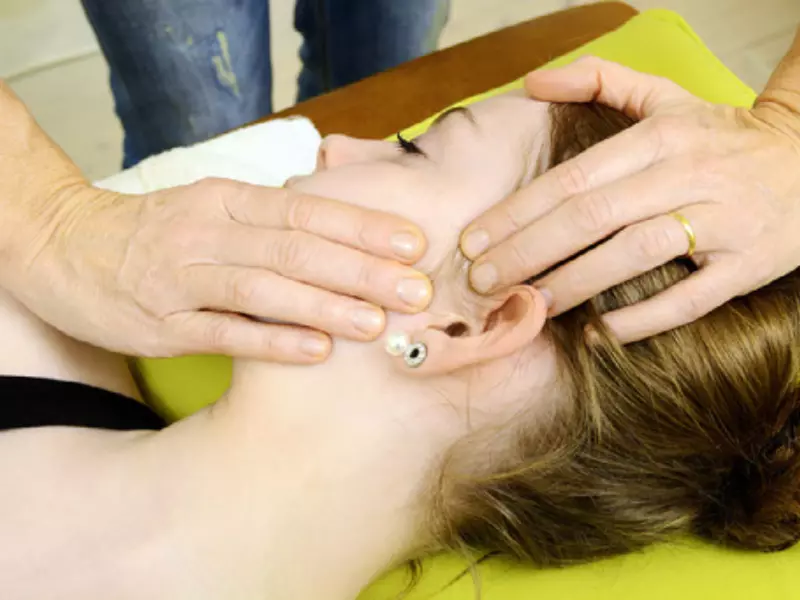
Pain is often associated with TMJD over the hinge of the joint or just inferior to the joint over the masseter muscle. There is a fibrocartilagenous disc inside the TMJ joint that assists with the smooth opening and closing of the joint. This disc or cushion can degenerate or change position, creating clicking, popping, and pain. Once the jaw mechanics are altered, this creates increased stress on the local musculature, leading to muscle pain. Pain can also come from bruxism or grinding, local trauma, and arthritis, which is a result of not correcting the biomechanics soon enough, and the joint wearing out. You don’t get osteoarthritis because you are old; you get osteoarthritis because you have old misalignment. The best course of action to resolve jaw pain is to start with a full evaluation of your neck and TMJ for subluxation. If this is present, it can be corrected with gentle techniques to realign the jaw and relax the masseter and pterygoid muscles, and adjust the upper cervical spine to remove nerve interference. This will most likely help to correct the jaw dysfunction and pain.

Jaw Popping and Clicking
TMJ clicking occurs because the small fibrocartilaginous disc acting as a cushion in the jaw joint slips out of place and then “pops” back into position during movement. When the disc is out of place, the jaw does not glide smoothly, creating a clicking sound. You would hear and feel this while opening and closing the mouth. The best treatment to resolve jaw clicking is to start with a full evaluation of your neck and TMJ for subluxation and altered alignment. If this is present, it can be corrected with gentle techniques to realign the jaw and relax the masseter and pterygoid muscles, and adjust the upper cervical spine to remove nerve interference. This will most likely help to correct the jaw dysfunction and clicking.
Jaw Locking
Jaw locking occurs in TMJ when the small disc acting as the cushion between the jaw joint slips out of place and acts as a physical barrier to jaw movement. Lockjaw feels like it sounds. The jaw actually gets stuck, and there is considerable pain in and around the TMJ joint. The best treatment to resolve jaw locking is to start with a full evaluation of your neck and TMJ for subluxation and altered alignment. If this is present, it can be corrected with gentle techniques to realign the jaw and relax the masseter and pterygoid muscles, and adjust the upper cervical spine to remove nerve interference. This will most likely help to correct the jaw dysfunction and locking. Other techniques that can be helpful are intra-oral muscle release and trigger point therapy.
Difficulty Chewing
TMJ can make chewing difficult by causing pain, muscle tension, and limited jaw movement due to inflammation or misalignment of the jaw joint. Difficulty chewing can impact one’s life by restricting diet, causing nutritional deficiencies, and risking malnutrition. It can create stress, anxiety, and depression due to eating challenges. Physically, it can lead to chronic jaw pain, headaches, choking risks, and gastrointestinal issues. This can be helped with gentle techniques to realign the jaw and relax the masseter and pterygoid muscles, and adjust the upper cervical spine to remove nerve interference. This will most likely help correct jaw dysfunction and reduce chewing difficulty.
Jaw Clenching
Jaw clenching or bruxism is primarily caused by stress, anxiety, and intense concentration, which all lead to muscle tension. Other reasons may be sleep disorders, misaligned teeth, neurological conditions, and side effects from medications. The result of habitual jaw clenching is sore facial muscles or facial pain, headaches, damaged teeth, TMJD, and clicking. The best solutions to relieve jaw clenching are making sure your cervical spine is free of nerve interference to minimize stress and anxiety, “tongue up” exercise where you place the tip of your tongue on the roof of your mouth, just behind your front teeth, and allow the jaw to drop and relax, ensuring the teeth are apart, massage of the affected muscle, warm compresses over the tender area, conscious awareness, and avoiding triggers like gum, hard foods, or ice.
Check Out Our Location Near You
Our office sits right on Main St in the heart of Birdsboro, just
8 miles from Reading — Main St runs straight into Reading, so it’s
an easy, direct drive either way. We’re proud to help patients
throughout Birdsboro, Douglassville, and Reading find lasting
pain relief.
3346 Main St, Birdsboro, PA 19508
Frequently Asked Questions
Can a chiropractor in Reading, PA help with TMJ?
Yes. McClimon Chiropractic has been helping patients with TMJ for over 20 years.
How do you permanently fix TMJ?
TMJ is primarily caused by misalignment of the joint itself, which affects the disc, and by cervical subluxation. A structural problem requires a structural solution. A structural problem treated with a chemical solution only masks the symptoms, whereas a structural solution or adjustment addresses the root cause and permanently fixes it.
What causes TMJ to flare up?
Increased stress, bruxism, excessive jaw muscle usage, poor posture, and hormonal fluctuations. These all increase inflammation, leading to jaw pain, stiffness, and clicking.
Can chiropractors “crack” jaws?
Yes. Chiropractors can adjust your jaw to improve alignment, motion, reduce clicking, and reduce pain associated with TMJ. Most likely, it is a very specific, gentle adjustment that does not involve a cavitation or “cracking” sound, which is caused by the release of nitrogen gas.
What happens if TMJ is left untreated?
Untreated, it can progress from minor clicks and pain to more severe clicking, popping, locking, and pain. It could also lead to migraines, earaches, tinnitus, dental issues, hearing issues, sleep disruption, and psychological stress. Over time, it could create arthritis and even lock up completely, where surgery is required to repair or remove the joint disc.
How do you get rid of TMJ fast?
For instance, TMJ relief can be achieved by performing gentle self-massage of the masseter muscles, applying cold packs to the affected joint to reduce inflammation, and practicing the tongue-positioning exercise to release tension. Also, use a soft diet and focus on correcting your posture.
Can you fix TMJ without surgery?
Yes. Most of the time, TMJ can be fixed with conservative care. Chiropractic is highly effective at managing TMJ, with studies suggesting that up to 75% to 100% of patients experience significant improvement in pain, clicking, and locking.
Is TMJ a medical or dental problem?
You could consider it a hybrid of both, depending on the condition’s uniqueness and severity. However, we always recommend moving from conservative care to more invasive care, such as medication or surgery. Chiropractic care is proven to be the most effective conservative treatment for TMJ affecting the root cause of it instead of just masking the symptoms. Remember, when you get cut, you can’t get uncut!
What is a chiropractic adjustment for TMJ like in Reading, PA?
A chiropractic adjustment for TMJ at McClimon Chiropractic in Reading, PA, is typically a soft, gentle traction-like maneuver to re-align the jaw and reduce pain, clicking, and locking. This would always be done after the cervical spine is clear of subluxation. The cervical spine or neck must be clear of subluxation before a truly accurate listing of the TMJ can be determined. In many cases, when the neck is corrected, TMJD corrects without ever having to be adjusted directly.
Can TMJ cause neurological problems?
Yes. TMJ disorders can cause various neurological problems. The close relationship with the jaw, fascial muscles, and trigeminal nerve means inflammation can cause radiating pain, headaches, dizziness, tinnitus, vertigo, and facial numbness.
$149 New Patient Special
Includes consultation with your doctor, thorough chiropractic examination, first treatment and customized plan of action.
